Trek Overview


Kedarkantha Trek Experience the Magic of Snow at 12,500 Feet
Kedarkantha Trek is among the most popular winter Treks in Uttarakhand, famous for its reliable snowfall, beginner-friendly trail, and panoramic summit views. Situated inside the Govind Wildlife Sanctuary, this winter snow trek is an excellent choice for first-time trekkers seeking a safe and well-supported Himalayan experience from December to April.
The Kedarkantha winter trek features a beautiful blend of dense pine forests, snow-covered campsites, and a rewarding summit climb at 12,500 feet. Thanks to its gradual altitude gain, clearly marked route, and strong safety measures, Kedarkantha is widely regarded as one of the best winter treks in India for beginners.
“Kedarkantha Winter Trek: Experience the Magic of Snow in Uttarakhand ”
Kedarkantha Trek Complete Guide
Our mission has always been to ensure that no trekker steps into the Himalayas without the right perspective. A trek is not just a checklist of summits; it is a serious commitment to the outdoors. Having the right information is what separates a reckless climb from a soulful journey.
This section serves as your definitive manual for the Kedarkantha Trek. We have distilled years of mountain experience and real-time feedback into this guide to give you a clear, honest picture of the trail.
We provide this depth of information because we want you to be more than just a visitor—we want you to be a prepared, responsible trekker who respects the mountains as much as we do
Trek Itinerary
1: Short Itinerary
Overview: Trek Summary at a trekhimlayansoul
Day 1: Pickup At Dehradun Railway Station (7:00 AM) to Sankri Basecamp
- Drive to Sankri Base Camp via Mussoorie, Kamptifall, Damta, Purola, Mori
- Distance: 190 km | Duration: 8-9 hours
- Overnight stay at Sankri hotel (Swargarohini Hotel or The Grand Shiva Hotel)
Day 2: Trek From Sankri to Juda Ka Talab Camp
- Distance: 5 km | Trek time: 4-5 hours | Altitude: 8,858 ft
- Overnight stay in camp (twin/three sharing)
Day 3: Trek From Juda Ka Talab to Kedarkantha Base Camp
- Distance: 3 km | Trek time: 2-3 hours | Altitude: 10,498 ft
- Overnight stay in camp (twin/three sharing
Day 4: Early Morning (3:30 AM) Trek From Base Camp to Kedarkantha Peak Summit(12,500 ft) and Same Days Return to Basecamp, Lunch Then Trek Down to Hargaon Camp
- Total trek distance: 11 km | Trek time: 7-8 hours | Altitude: 8,498 ft
- Overnight stay in camp (twin/three sharing
Day 5: Trek From Hargaon Camp to Sankri Market and Same Day Drive Back to Dehradun
- Distance: 4.5 km | Trek time: 2-3 hours | Altitude: 6,398 ft
- Drive Distance: 190 km | Duration: 7-8 hours
- Drop-off at Dehradun Railway Station by 9:00-10:00 PM

2: Detailed Day-wise Itinerary
A Complete Route & Campsite Breakdown
Detailed Itinerary (Day 1)
Overview: A complete route & Campsite Breakdown
Day 1: Pickup from Dehradun Railway Station (7:00 AM) Drive to Sankri (Base Camp) by Tempo Travelers
Total distance 190 km – 8 | 9-hour journey | Mode of travel – Tempo Travelers | Altitude – Sankri Base Camp – 1920 m | Overnight stay – Trek Himalyan Soul Swargarohini Hotel – or The Grand Shiva
Trek Himalyan Soul arranges transportation for trekkers from Dehradun Railway Station in the morning, departing for Sankri between 6:00 AM and 7:00 AM.
Dehradun is the capital of Uttarakhand and one of the most beautiful places in India. The main attraction is Rajpur Road, which allows you to enjoy the beauty of Dehradun. After an hour, reach Mussoorie, also known as the "Queen of the Hills." People visit this place in large numbers during holidays with their families and friends.
Dehradun to Mussoorie: The drive often begins from Dehradun and takes you through the picturesque hill station of Mussoorie. The natural beauty of the Mussoorie hills, with its lush greenery and pleasant weather, is a wonderful start to your journey.
Mussoorie to Kempty Falls: Continuing your drive, you'll stop at Kempty Falls, a popular tourist destination. You'll spend about 40 to 45 minutes at Kempty Falls for breakfast and a break to admire the beautiful Himalayan mountains surrounding it. Then, you'll continue your journey towards Sakri. This fall offers a refreshing stop with beautiful waterfalls surrounded by lush green hills.
After Kempty Falls, you'll continue your journey through Purola. You'll spend about 40 to 50 minutes at Purola for Lunch From here, the terrain becomes even more hilly and rugged, offering a glimpse of rural Himalayan life.
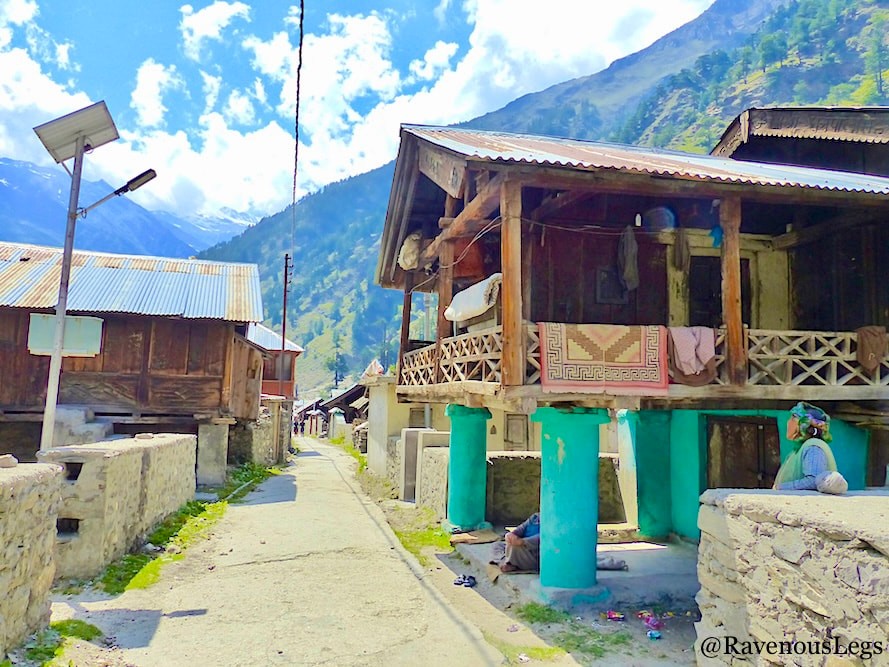
Beautiful Villages: The drive takes you through several small villages and hamlets, each with its own charm. You'll pass terraced fields, pine forests, and quaint houses scattered across the landscape. Stunning Valleys: As you approach Sankri, you'll enter valleys with breathtaking views. The Tons River Valley is particularly beautiful, and you'll cross it on your way to Sankri. Surrounded by lush hills, this river is a sight to behold.
Final Stop in Sankri: The final stretch of the drive passes through dense forests and narrow mountain roads. The route can be challenging, but the natural beauty is truly amazing. As you approach Sankri, you'll see mountain views, surrounded by lofty peaks.
Sankri: When you reach Sankri, you'll find it a charming village with the backdrop of the Himalayas. The views of the surrounding mountains, especially at sunrise and sunset, can be breathtaking. Visit Hotel Swargarohini, Grand Shiva Home. Refresh yourself and enjoy an evening snack on the open-air terrace with spectacular views. You'll receive some briefings, after which you can go on an evening excursion, but stay at the hotel for dinner. Enjoy a delicious dinner and a relaxing night in the mountains.
Day 2
Overview: Trek from Sankri to Juda Ka Talab Trek
Day 2: Trek from Sankri to Juda Ka Talab Trek
Trek Distance – 5 km – 4-5 hours | Mode of Travel – On foot | Altitude – Juda Ka Talab – 2700 meters | Overnight Stay – Camp in tents arrangement where two people share a Tent
Today, a heart-warming morning awaits your awakening. Experience the serenity amidst the mountains; here, no connectivity and no material things can disturb you, only peace and tranquility.
Enjoy hot coffee/tea at 6:00 am and get ready for breakfast at 7:30 am. You will need to leave at 8:30 am, as per your guide's instructions.
The Sankri to Juda Ka Talab trek on the way to Kedarkantha is a beautiful journey that takes you through the lush forests of Govind National Park in Uttarakhand, India. Here is a rough route and some of the must-see sights along the way:
Sankri Base Camp Your journey to Kedarkantha begins from Sankri. Your first day's trek begins at Sankri Base Camp, heading towards Juda Talab, the original and oldest trek Route to Kedarkantha, The first trek in the Himalayas to be discovered by Trekkers in winter. Team Trek Himalyan Soul 2001, a local trekking organisation, first opened this trek to people in winter and began this journey through history.
Forest Trail:As you leave Sankri, you'll enter a dense forest filled with pine, oak, and rhododendron trees. This forest trail is especially beautiful during spring when the rhododendron trees are in bloom.
Scenic Views: As you climb higher, you'll find occasional openings in the forest, offering glimpses of distant snow-capped peaks. The Swargarohini Range and Bandarpunch are some of the most prominent peaks you'll see.
Water Crossings: Along the way, you'll encounter several small streams and water crossings. These add to the trek's charm and provide opportunities for refreshing breaks.
Juda Ka Talab is a small, picturesque lake surrounded by meadows and makes an excellent camping spot. The reflection of the surrounding mountains in the clear water makes it a beautiful place.
Mountain Views:Juda Ka Talab offers views of the Phulara Ridge and Swargarohini peak Ranges and the Fachukandi pass Range, all of which are filled with beautiful Rishons. You can see these beautiful Rishons from your campsite at Juda Ka Talab. You'll also get amazing views of the Kedarkantha Peak, which is quite close by. The clean mountain air and tranquil atmosphere make this campsite a great place to spend the night. You'll love the company that offers proper camping on the frozen lake near Juda Ka Talab, and this experience is only available through Trek Himalyan Soul.
Day 3
Overview: Trek from Juda Ka Talab to Kedarkantha Base
Day 3: Trek from Juda Ka Talab to Kedarkantha Base
Trek Distance: 03 km – 2 | 3 hours | Mode of Travel – On foot | Altitude – Kedarkantha Basecamp – 3200 m | Overnight Stay – Camp in tents – Twin share basis
The trek from Juda Ka Talab to Kedarkantha Base Camp is a key part of the Kedarkantha Trek in Uttarakhand, India. It offers panoramic views of the Himalayas.
You can take off a little late today and enjoy a hot breakfast. Sitting near Juda Ka Talab and having breakfast here can be a particularly memorable experience.
You will begin your trek from Juda Ka Talab, a picturesque alpine lake surrounded by meadows. The lake's clear waters and the reflection of the surrounding peaks create a serene atmosphere. Enjoy the beautiful surroundings before embarking on your journey.
The route from Juda Ka Talab to Kedarkantha Base Camp is a gradual climb through a mix of meadows and forests. The path can be icy, especially during the winter months, so be sure to wear appropriate footwear and carry trekking poles for stability.
Kedarkantha Peak Views: As you trek, you'll see views of Kedarkantha Peak from afar. This snow-capped peak stands tall and will always remind you of your ultimate goal.
Pine Forests: You'll pass through dense pine forests with tall trees. The forested areas provide a refreshing change from the grasslands and are especially captivating in the snow.
Mountain Views: This trek offers stunning panoramic views of the surrounding Himalayan peaks, including the Swargarohini, Bandarpoonch, and Gangotri-Yamunotri mountain ranges. These views become even more captivating as you ascend.
Kedarkantha Base Camp: After a few hours of trekking, you'll reach Kedarkantha Base Camp. This campsite is located in a high-altitude meadow, offering a stunning 360-degree view of the Himalayas. The Kedarkantha peak is clearly visible from here, making it an ideal place to relax and acclimatize.
Snow (in winter): Depending on the season and recent weather, you may encounter snow along the way. This can make the trek more challenging but also more beautiful.
Kedarkantha Base Camp is a popular place for trekkers to spend the night before making the final ascent to Kedarkantha Peak. The clean mountain air and calm, serene atmosphere at Base Camp provide a peaceful environment for trekkers to prepare for the next day's adventure
Today after Evening Snacks Give you Complete briefing by the Trek Himalyan Soul team for the next day's Kedar Kantha summit and the and Give you Spikes and Gaiters technical equipment and will be provided to you here and you will be prepared for a new journey and here you can enjoy a delicious dinner with Trek Himalyan Soul and spend a beautiful night at Kedarkantha Base Camp.
Day 4
Overview: Trek from Kedarkantha Base Camp to Kedarkantha Peak (3800 meters) at 12500 ft and descend to Hargaon Camp.
Day 4: Trek from Kedarkantha Base Camp to Kedarkantha Peak (3800 meters) at 12500 ft and descend to Hargaon Camp.
Trek distance 11 km – 7| 8 hours | Mode of travel – On foot | Altitude – Hargaon Camp – 2645 meters | Overnight stay – Camp in a tent Twin share basis
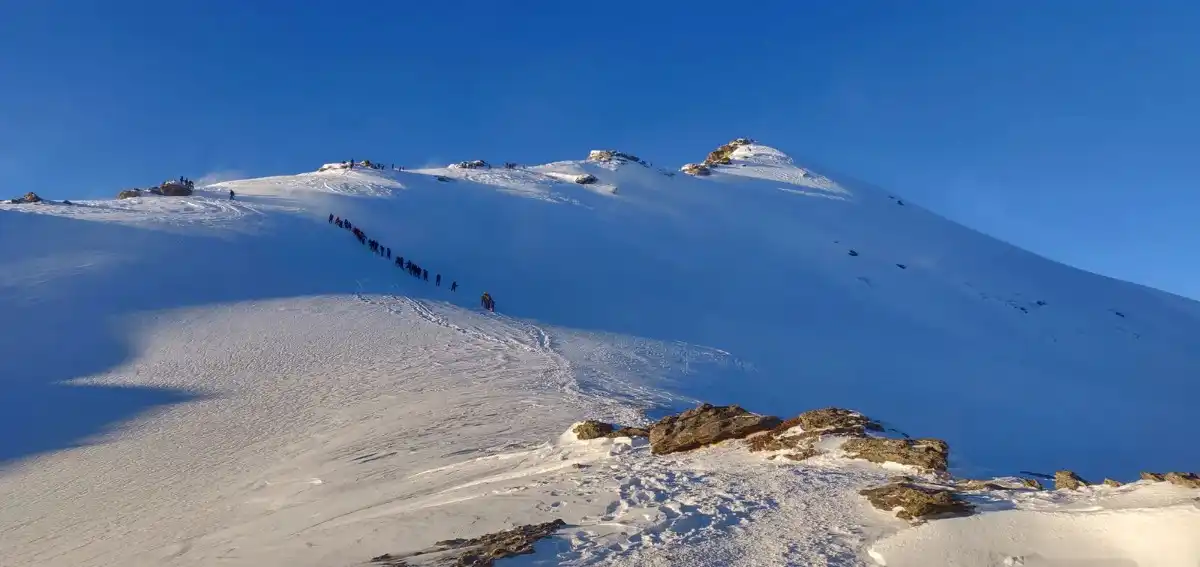
Today is the main day of your trek, so be prepared at 3:30 am to watch the sunrise from Kedarkantha Peak. There's nothing better than watching the sun rise from the summit, as the view is simply breathtaking. Anyone who sees it is mesmerized.
Kedarkantha Peak is the final stop on the Kedarkantha trek, and offers breathtaking views of the surrounding Himalayan peaks. The route and its location from Kedarkantha Base Camp to Kedarkantha Peak are described below:
Starting from Kedarkantha Base Camp: The trek to Kedarkantha Peak typically begins at Kedarkantha Base Camp. This campsite is located in a high meadow and serves as the starting point for summit attempts.
To reach the summit early in the morning and enjoy the best views, it is recommended to start very early in the morning. Starting early allows you to climb when the snow is still frozen and the weather is clear.
Climbing through Alpine Meadows: The route from Base Camp to the summit gradually ascends through alpine meadows. The landscape becomes more open, and you will be walking on a mixture of snow and rocks.
Snow-Covered Terrain (Winter): Depending on the season, you may encounter varying amounts of snow as you climb higher. During the winter months, the trail is often covered in snow, which can make the trek more challenging but incredibly beautiful.
Views of the Surrounding Peaks: As you climb higher, you'll experience breathtaking views of the surrounding Himalayan peaks, including Swargarohini, Bandarpoonch, Kalanag, and others. The views become even more captivating as you approach the summit.
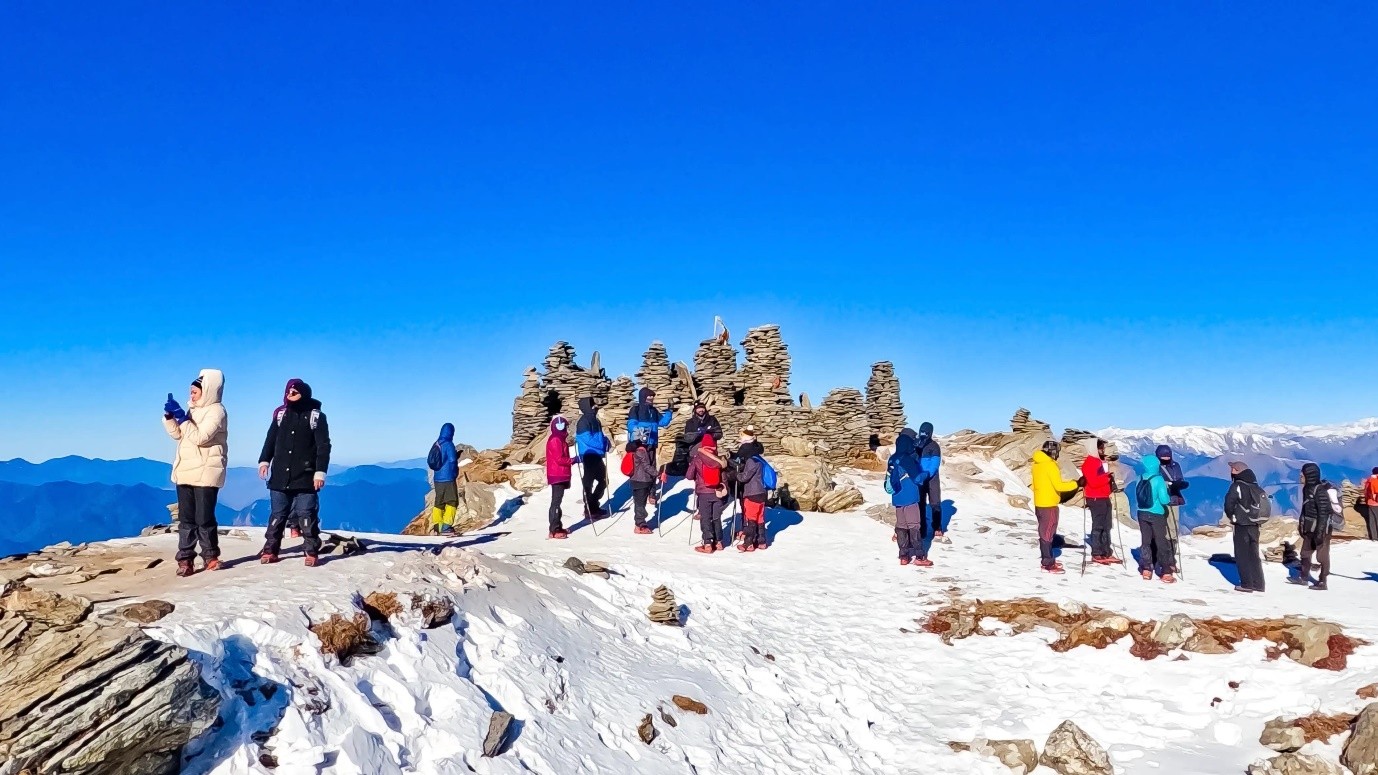
Kedarkantha Peak: Kedarkantha Peak is a small, snow-capped peak. Once you reach the summit, you'll enjoy panoramic views of the Himalayan range. Kedarkantha Peak itself is a stunning sight, and you'll also get a clear view of the Har Ki Dun Valley.
Kedarkantha Peak is at an altitude of approximately 12,500 feet (3,800 meters) and is known for its panoramic 360-degree views of the surrounding mountains and valleys. It is a popular spot for trekkers to admire the beauty of the Himalayas, especially at sunrise when the peaks are bathed in golden light.
Kedarkantha peak is 12,500 feet. After spending some quality time at the summit, you will begin your descent back to Kedarkantha Base Camp. Take a photo with your group here for a good memory and then head back to Kedarkantha Base Camp, the Trek Himalyan Soul team will prepare hot meals for you during the day. Upon reaching the camp, relax and enjoy lunch and then depart for your next camp, Hargaon last Camp. You will reach Hargaon Camp before the evening Snacks team time.
Day 5
Overview: Trek from Hargaon Thach to Sankri Bazaar - then drive to Dehradun
Day 5: Trek from Hargaon Thach to Sankri Bazaar - then drive to Dehradun
Trek distance - 4.5 km – 2/3-hour trek (190 km drive from Sankri to Dehradun) | Mode of travel - Tempo Travelers
Enjoy breakfast this morning at your last camp on this trek. Start trekking, and as you descend from Hargaon to Sankri, you'll see many sights and reach apple orchards.
Hargaon Campsite: Your last day of trekking usually begins at Hargaon Campsite. Hargaon is a picturesque campsite located in a forested area. It's a quiet and relaxing place with the melodious sounds of the forest.
Descent from the Forest: The route from Hargaon camp to Sankri Bazaar is primarily a descent through forested terrain. You'll walk through dense pine and oak forests, which can provide a different, but equally captivating, view compared to the alpine meadows higher up the trek.
As you descend through the forest, you can occasionally glimpse the surrounding Himalayan peaks. These views can be especially beautiful, with the play of light and shadow through the trees. Pasting Through Villages As you approach Sankri, you'll pass small villages and hamlets. These offer a glimpse into the local life of the region, and you may encounter friendly villagers along the way.
Your trek ends upon reaching Sankri. Sankri is a charming village in the Uttarkashi district of Uttarakhand and is the starting and ending point of the Kedarkantha Trek. The village is surrounded by snow-capped peaks and lush landscapes.
Trek Himalyan Soul arranges transportation for trekkers from Sankri to Dehradun Railway Station. The trek will depart for Dehradun from Sankri at approximately 11:30 a.m. and arrive between 9:00 and 10:00 p.m.
Today is your last breakfast on this trek with the Trek Himalyan Soul team. Certificates will be presented, and after some beautiful photos, we'll bid you all farewell in Sankri.
3: Kedarkantha Trek Difficulty and Experience
Overview: what to Expect : Terrain , Weather & challenges
Kedarkantha a Moderate trek: While the trail is well-defined, the "Moderate" label ensures that trekkers don't underestimate the physical toll of high-altitude climbing and sub-zero temperatures.
Why Kedarkantha is "Moderate"
Altitude Gain: You start from Sankri at roughly 6,400 ft and climb to 12,500 ft. Gaining over 6,000 feet in a few days is a significant task for the human respiratory system.
The Incline: While the forest sections are gentle, the stretch from the Base Camp to the Summit is a steep, uphill grind. On the way down, this same incline puts immense pressure on your knees.
Winter resistance: Walking through snow isn't like walking on a treadmill. It requires more calories, better balance, and significantly more leg strength.
Beginners: It is the perfect "first" Himalayan trek. The gradient is gentle, and the trail is well-paced by foot traffic.
For Experienced Trekkers: It serves as a beautiful "leisure" trek with high rewards (360-degree views) for minimal technical effort.
The "Moderate" Factor: The difficulty shifts to moderate specifically during peak winter (January/February) when you have to knee-deep snow. Walking on snow consumes 2x more energy than walking on soil.
The Summit Push: The final climb to 12,500 ft is steep and can be windy, which is the only "challenging" section of the entire journey.
Who Can Go?
The Kedarkantha Trek Age limit
- Minimum Age: 8–10 years (must be active children).
- Maximum Age: Up to 55–60 years (subject to medical fitness and heart health).
- The Golden Rule: If you can walk 5 km comfortably on a flat surface, you can conquer this summit with a steady pace.
Why it is considered "Beginner-Friendly
- Manageable Distance: The total round-trip distance is approximately 23 km, spread over 4 days. From Sankri to Sankri
- Gradual Ascent: Unlike steep technical climbs, this trek offers a gentle incline. This slow gain in altitude helps trekkers acclimatize naturally, significantly reducing the risk of Acute Mountain Sickness (AMS).
- Well-Defined Trails: The paths are well-marked, passing through iconic clearings like Juda Ka Talab and open meadows. No technical climbing skills or mountaineering equipment are required.
4: Best time to visit Kedarnath trek
Overview: Seasonal weather & temperature guide
The Kedarkantha Trek is a seasonal trek and is operational mainly from September to April. Each month during this period offers a different trekking experience. The best time to visit depends on whether you want greenery, snowfall, or a balanced trekking experience. The best time to visit the Kedarkantha trek for snowfall in Uttarakhand is during the winter months from late December to April. Here’s a closer look at what you can expect during this snow-clad season:
Autumn Season – Clear Trails & Pleasant Weather (September to November)
The trekking season for Kedarkantha officially begins in September. During this time, the monsoon has ended and the trails become safe and dry.
- Required Warm Layers: 2–3 warm layers
- Temperature: Day: 10°C to 18°C | Night: 5°C to 8°C
- Snow Conditions: No snow
This season is ideal for trekkers who prefer clear mountain views, green forests, and comfortable weather. Visibility is excellent, and the trail is peaceful, making it perfect for beginners and nature lovers.
Early Winter – Beginning of Snowfall (December)
December marks the start of winter at Kedarkantha. Snowfall begins, especially at higher altitudes, and the trek slowly transforms into a winter wonderland.
- Required Warm Layers: 3–4 warm layers
- Temperature: Day: 5°C to 10°C | Night: -5°C to -8°C
- Snow Conditions: Fresh snowfall at camps and summit
- Best Winter Months For Trekkers: This is the prime season when the beauty of the Kedarkantha trek is at its peak. The trails, campsites, and the summit are all blanketed in fresh, powdery snow.
- Witness Heavy Snowfall And Frozen Lakes: If you want to experience heavy snowfall, breathtaking white scenery, and frozen lakes, this period is ideal. However, temperatures can drop significantly, often plunging to -5°C to -10°C at night.
This month is suitable for trekkers who want to experience snow but still prefer relatively manageable trail conditions.
Peak Winter – Heavy Snow & Challenging Conditions (January to February)
January and February are the coldest months on the Kedarkantha Trek. Due to heavy snowfall, trekking activity is limited and the trail remains challenging.
- Required Warm Layers: 4 warm layers
- Temperature: Day: 3°C to 7°C | Night: -8°C to -10°C
- Snow Conditions: Heavy snow on trails and campsites
- Continuous Snow: The trek still has plenty of snow though snowfall begins to taper off. Higher altitudes remain beautifully blanketed in snow, offering breathtaking views. Temperatures during this period are slightly milder compared to the biting cold of December and January, making it a more comfortable winter trekking experience.
- Trek Comfortably In Moderate Winters: It’s a great time for a winter trek that balances adventure with milder temperatures, this season offers the ideal conditions for winter trekking.
During this period, the trek mostly remains in hiking and snow-walking mode. It is recommended only for trekkers who are prepared for extreme cold and deep snow.
Late Winter – Best Snow Trekking Phase (March)
March is considered one of the best months to trek Kedarkantha. Snow is still present, but weather conditions start becoming more stable.
- Required Warm Layers: 3 warm layers
- Temperature: Day: 5°C to 12°C | Night: -3°C to -5°C
- Snow Conditions: Good snow cover, especially near the summit
This month offers the perfect balance of snow trekking and comfort, making it ideal for both beginners and experienced trekkers.
End of Season – Limited Treks (April)
In April, trekking activity on Kedarkantha becomes very limited. Snow starts melting rapidly, especially at lower altitudes.
- Required Warm Layers: 2–3 warm layers
- Temperature: Day: 8°C to 15°C | Night: 0°C to 5°C
- Snow Conditions: Snow remains only near the summit
- Snow Beginning To Melt: By late March and April, the snow starts to melt, especially at the lower elevations. However, there is still snow near the summit, making it a good option for trekkers who want a mix of snow and milder weather.
- Transition Season: As spring approaches, you’ll also start to see the first signs of blooming meadows in the lower regions, while higher altitudes remain snowy.
Although the trek still operates, it is done on a very limited basis. April is suitable only for trekkers who want a mix of snow patches and mild weather.
Witness The Winter Wonderland of Kedarkantha Trek to visit December To April
- Required Layers Of Warm Clothing: 3-4 warm clothing
- Temperature: Expect cold temperatures, ranging from -5°C to -10°C at night and around 5°C to 10°C during the day. (Add thermometer and day-night icons)
- Snow Conditions: This period offers a 360-degree view of stunning snow-covered landscapes, making it a fantastic time for snow trekking and winter photography.
5: How to reach the Base Camp
Overview: Your detailed travel & connectivity guide
How To Reach Dehradun railway Station for Kedarkantha Trek?
Reaching Dehradun is the first step in your journey to the Kedarkantha Trek. Here are several ways to get to Dehradun, depending on your starting point:
1. By Air
- Airport: Jolly Grant Airport (Dehradun) is the nearest airport, located about 25 km from Dehradun city center.
- Flight Details: You can book direct flights to Dehradun from major cities in India, such as Delhi, Mumbai, Bangalore, and others.
From Airport to Dehradun
- Taxi Services: Taxis are available at the airport for hire to take you to Dehradun city or directly to your accommodation.
2. By Train
- Train Station: Dehradun Railway Station is well-connected with major cities across India.
- Train Travel: You can take trains from cities like Delhi, Mumbai, Kolkata, and others. Popular trains include the Nanda Devi Express, Dehradun Shatabdi, and Mussoorie Express.
- Travel to City Center: The railway station is located close to the city center, making it easy to reach hotels and other accommodations.
3. By Bus
- Bus Services: Dehradun is well-connected by road, and many private and government buses operate from nearby cities, especially Delhi.
- From Delhi ISBT Kashmiri Gate: You can catch a bus to Dehradun from ISBT Kashmiri Gate in Delhi. Buses include both AC & Non-AC options.
- Travel Time: The journey typically takes around 6-8 hours depending on traffic.
- From Other Cities: Similar bus services are available from cities like Haridwar, Rishikesh, and Mussoorie.
4. By Car
- Self-Drive: If you prefer driving, you can rent a car or drive your own. The distance and approximate travel time are as follows:
- From Delhi: ~ 250 km, about 6-8 hours via NH 44 and NH 7.
- From Haridwar: ~ 50 km, about 1.5 hours via NH 58.
- From Rishikesh: ~ 35 km, about 1 hour via NH 7.
5. Transportation Within Dehradun
- Local Transport: Once in Dehradun, you can use local taxis, auto-rickshaws, or ride-sharing services to reach your accommodation or transport hub.
How To Reach Sankri From Dehradun?
Once you are in Dehradun, now Sankri Base Camp is about 200km from Dehradun Railway Station. If you are Trekking with Trek Himalyan Soul then all you need to do is to reach at Pickup Location at 6:00–7:00 am Dehradun Railway Station and you will be taken to Sankri via Mussoorie, Kemptifall, Purola, Mori, Sankri.
However, if you trekking without our services then you can follow these options to reach Sankri from Dehradun by road:
- Distance: Sankri is about 200 km from Dehradun.
- Travel Time: The drive usually takes around 8-10 hours, depending on road conditions and traffic.
Transport Options
- Private Taxi: You can hire a taxi from Dehradun, which is convenient and allows for a flexible schedule.
- Shared Jeep/Taxi: There are shared jeep services available from Dehradun to Sankri, which can be more economical.
- Self-Drive: If you prefer to drive yourself, the route is scenic, taking you through beautiful landscapes, villages, and forests.
6: Packing and Gear List
Overview: Your complete trekking checklist
Essential Gear for the Kedarkantha Trek Packing List
1. Trekking Gear & Bags
- Main Backpack (50–60 Liters): Must have good hip support and a rain cover.
- Daypack (20 Liters): Essential if you plan to offload your main bag; carries water, snacks, and a jacket.
- Trekking Poles: Highly recommended for stability on snowy slopes.
2. Clothing (The Layering System)
- Base Layer (2-3 Pairs): Quick-dry, moisture-wicking thermals (top and bottom).
- Mid Layer (2): Fleece jackets or sweaters for insulation.
- Outer Layer (2): A high-quality padded down jacket (rated for -10°C).
- Trekking Pants (2): Water-resistant and windproof pants. Avoid jeans at all costs.
- T-shirts (3): Collared, full-sleeve dry-fit tees to prevent sunburst on the neck.
3. Footwear & Socks
- Trekking Boots: High-anchor, waterproof boots with good grip Decathlon Forclaz or similar MH 100) Asain, Jonmart hiking Shoes .
- Woolen Socks (4 Pairs): For sleeping and extra warmth at night.
- Cotton Socks (4 Pairs): For trekking during the day.
4. Headwear & Accessories
- Sun Cap: To protect against UV rays during the day.
- Woolen Cap/Balaclava: Must cover your ears to prevent heat loss.
- Neck Warmer/Buff: Protects your face from cold winds.
- Gloves: One pair of fleece liners and one pair of waterproof outer gloves.
- Sunglasses: Polarized/UV protected to prevent snow blindness.
5. Personal Hygiene & Toiletries
- Sunscreen (SPF 50+) and Lip Balm.
- Moisturizer and Sanitizer.
- Toilet paper and Biodegradable wet wipes.
- Toothbrush, Toothpaste, and a small quick-dry towel.
6. Health & First Aid
- Personal Medikit: Band-aids, crepe bandage, and antiseptic.
- Anti-Altitude Sickness: Diamox (consult your doctor first).
- Pain Relief: Volini spray or Moov.
- Water Purification: Tablets or a LifeStraw.
Quick Tips for a Successful Trek with Trek Himalyan Soul
- Hydration: Drink at least 3/4 liters of water daily to help with acclimatization.
- Batteries: Cold drains phone and camera batteries fast. Keep them inside your sleeping bag at night to keep them warm.
- Eco-Friendly: "Pack it in, pack it out." Don't leave any plastic on the trail.
Must-Have Medicines for Kedarkantha Trek
1. Altitude & Breathing
- Diamox (Acetazolamide): The most common medicine for AMS (Acute Mountain Sickness). It helps your body acclimatize faster.
- Note: Start a preventive dose only after consulting your doctor, as it is a diuretic.
- Camphor (Kapur): Carrying a small pouch of camphor to smell can help some people feel more comfortable while breathing in thin air.
2. Pain & Inflammation
- Combiflam / Ibuprofen: For muscle aches, joint pain, or body fever after a long day of climbing.
- Dolo 650 (Paracetamol): For mild fever or headaches (often a first sign of dehydration or AMS).
- Diclofenac Gel/Spray (Volini/Moov): Essential for calf muscle cramps or knee pain during the descent.
3. Digestive Health (Very Important)
- Digene / Pudin Hara: For acidity or bloating caused by heavy meals at high altitudes.
- Ondem (Ondansetron): For nausea or vomiting (common symptoms of altitude sickness).
- Eldoper / Nor-Metrogyl: For loose motions or stomach infections.
- ORS / Electral: To prevent dehydration. Mix one sachet in your water bottle every day.
4. Respiratory & Cold
- Ascoril/Alex Syrup (or Lozenges): For "Khonchi" (dry mountain cough) caused by cold, dry air.
- Cetirizine / Okacet: For allergic reactions or a runny nose.
- Avomine: If you get motion sickness during the bumpy 10-hour drive from Dehradun to Sankri.
5. First Aid Basics
- Band-aids & Cotton: For small nicks.
- Crepe Bandage: In case of a minor ankle sprain on the snowy trail.
- Betadine/Dettol: Antiseptic for any cuts.
- Anti-fungal Powder: To keep your feet dry and prevent fungal infections from wet socks.
Mandatory Documents
- Original and photocopy of government photo identity card- (Aadhar Card, Driving License, Voters ID, etc.
- Passport and Visa important to foreigners.
- Medical Certificate (First part should be filled by the Doctor and Second part by the Trekker.
Declaration Certificates
Note: Many trekkers commit the same mistake of carrying unnecessary items on a trek which only makes the backpack heavy. It is important to know the right items to carry. It differs from season to season if you are trekking in summers then carry less layers of warm clothing and if you are trekking in winters carry enough layers to protect yourself against chilly cold.
7: Prepration and fitness tips
6-Week Plan specifically tailored for Trek Himalyan Soul requirements.
1. Trek Himalyan Soul Fitness Criteria
Trek Himalyan Soul emphasizes that a trekker should be able to cover a certain distance comfortably to ensure they don't get exhausted before the summit.
- The Benchmark: Cover 5 km in 30 to 35 minutes.
2. The 6-Week "Trek Himalyan Soul" Training Schedule
Weeks 1-2: Base Building (The "Startup" Phase)
- Running: 3 days a week. Run/Walk 3 km.
- Strength:
- Knee Pushups: 3 sets of 15 (Total 45).
- Half Squats: 4 sets of 18 (Total 72).
- Plank: 2 sets of 30 seconds.
- Focus: Getting the heart rate up and opening the lungs.
Weeks 3-4: Endurance Loading (The "Intermediate" Phase)
- Running: 4 days a week. Increase distance to 4.5 km.
- Strength:
- Forward Lunges: 3 sets of 15 reps per leg.
- Half Squats: 4 sets of 20.
- Plank: 3 sets of 40 seconds.
Trek Himalyan Soul Tip: Start walking with your actual trekking shoes once a week to break them in and avoid blisters on the trek.
Weeks 5-6: Peak & Approval (The "Summit" Phase)
- Running: 4 days a week.
- Target: 5 km in 32-35 minutes.
- Strength:
- Stair Climbing: Climb 3-4 floors 5 times. (Excellent for the Kedarkantha summit slope).
- Knee Pushups: 3 sets of 20.
- Plank: 1 set of 90 seconds (or 3 sets of 30s).
- Proof: Ensure you have recorded at least 3-4 successful 5km runs on your app.
3. Modified Exercise Breakdown
| Exercise | Target for Kedarkantha | Trek Himalyan Soul Logic |
|---|---|---|
| Jogging / Running | 5 km (35 mins) | Ensures your heart can handle low oxygen at 12,500 ft. |
| Knee Pushups | 45 Reps (3×15) | Builds shoulder strength for your 10kg rucksack. |
| Half Squats | 72 Reps (4×18) | Protects your knees during the steep descent from the summit. |
| Forward Lunges | 30 Reps (Total) | Essential for balance on slippery “Hard Ice” patches. |
| Planks | 1 Minute (Total) | Keeps your posture straight while climbing with a backpack. |
4. Trek Himalyan Soul Prep
- Sankri (Base Camp): This is where your oxygen levels and fitness will first be checked.
- Micro spikes & Gaiters: Trek Himalyan Soul usually provide these. Your training (specifically lunges) will help you walk comfortably while wearing this extra weight on your feet.
- Hydration (The 4L Rule): Trek Himalyan Soul guides are very strict about water. Practice drinking 3-4 liters of water during your training weeks.
- AMS (Acute Mountain Sickness): If you are fit, your body uses oxygen better, significantly reducing your chances of headaches or nausea at the summit.
5. What to show the Trek Himalyan Soul Team:
- Strava/Nike Profile: A screenshot or link showing you have been active for at least 4 weeks.
- Medical Certificate: Unlike just fitness apps, Trek Himalyan Soul requires a signed Medical Fitness Certificate by a doctor.
- Consistency: Show them that you didn't just run once, but you have been "Trek-Fit" for a month.
This is a suggestion that will help you on your trek, but if you are generally fit and healthy, you can prepare according to your own preferences.
8: Trakhimalyansoul safety Standerds and Experties
Overview: Our Expertise why we are India's Trusted Trekking Community
Why Trek Himalyan Soul is the Safest Choice for Kedarkantha Trek
At Trek Himalyan Soul, your safety is not just a protocol; it is our heritage. With over 35 years of experience and our roots in Sankri, we provide a level of security that only locals can offer.
1. Elite Safety Standards
- NIM Certified Leaders: Our trek leaders are certified from the Nehru Institute of Mountaineering (NIM). They are experts in high-altitude rescue and wilderness first aid.
- Daily Health Checks: We conduct twice-daily health screenings using Oximeters and BP Monitors to track your oxygen saturation and pulse.
- Emergency Oxygen & Kits: Every batch carries portable Oxygen Cylinders and a comprehensive medical kit stocked with essential high-altitude medicines.
- Technical Gear: We provide high-quality Micro-spikes (Crampons) for grip on slippery snow and Gaiters to keep snow out of your boots.
2. Premium Accommodation (Hotels & Tents)
- Basecamp Stay (Sankri): Unlike crowded guest houses, we provide comfortable stays in our Trek Himalyan Soul Hotel/Homestay in Sankri. You get clean rooms, warm hospitality, and a chance to experience authentic Garhwali culture.
- High-Altitude Camping: We use Premium 4-Season Tents designed to withstand heavy snowfall and bone-chilling winds.
- Insulated Bedding: To ensure a warm sleep in -10°C, we provide high-quality sleeping bags rated for extreme temperatures, along with thick foam mats for extra insulation.
3. Reliable Transport Services
- Dehradun to Sankri: We provide pickup and drop services from Dehradun Railway Station Safe Mountain Driving: Our drivers are locals who are experts at navigating the winding, snow-covered roads of the Himalayas.
- Vehicle Fleet: We use comfortable and well-maintained vehicles like Tempo Travelers, Ertiga Taxi, ensuring a smooth 8-10 hour journey to the base camp.
4. Nutritious & Fresh Meals
Note - We Five three meals a day including snacks and soup. A variety of delectable and healthy food is provided which includes: Indian, Chinese and other Western meals. They are nutritious and keep you fit and healthy on the trek ( veg food or Jain food & Egg) Daily fruits keep your energy levels high. Hygiene First: Our kitchen staff follows strict hygiene standards, ensuring clean drinking water (boiled/filtered) at all campsites.
Frequently Asked Questions
How difficulte is kedarnath trek ?
What is the maximum altitude?
What is total trekking distance ?
Is the mobile network on the trek?
Are their any ATM in Sankri ?
Trek Fee
Complete Package from Dehradun, Rishikesh to Dehradun
Extra Notes
Select Date To Register - 2026
Ethics, Health & Safety
Safety Over Summit: The mountain will always be there, but your safety is irreplaceable. Knowing when to turn back due to weather or health is the mark of a true trekker.
Respect the Altitude: Above 10,000 ft, your body follows its own rules. Prioritize acclimatization and consistent hydration; never ignore the early signs of altitude sickness.
Mountain Ethics (Leave No Trace): Carry your trash back. We are guests in the wilderness ensure the trails remain as pristine as you found them.
Trust the Experts: Local guides understand the mountain’s temperament better than any map. Follow their advice—it is based on years of survival and experience.
Physical Readiness: A trek is a physical commitment. Arriving fit ensures that you don't just endure the trail, but actually enjoy the journey.
Trek Information
- Difficulty: Moderate
- Duration: 5 Days / 4 Nights
- Altitude: 12,500 feet
- Distance: 25 kms
- Region: uttarakhand
- Basecamp: Sankri
- Accommodation: Tents/ Hotel
- Suitable For: 8 to 60 years
- Cloakroom: Available
- Offloading: Available
Guidance You Can Trust
Enquire Now
Trek Gallery